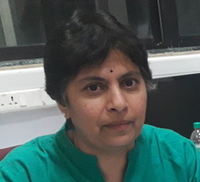
Nagasuma Chandra
IISc, Bengaluru FASc since 2018
Nagasuma Chandra is a Professor at the Department of Biochemistry and is additionally affiliated with the Bioengineering Department at the Indian Institute of Science, Bengaluru. She obtained her PhD from the University of Bristol, UK. Her research is interdisciplinary, involving computational modelling of complex biological processes to address fundamental questions about how genome-wide molecular networks respond to a variety of pathological conditions and how that knowledge can be translated into biomedical applications. She is a Fellow of the Indian Academy of Sciences, Bengaluru, and the Indian National Science Academy, New Delhi.
Session 2A: Symposium on Artificial Intelligence in Health
Chairperson: Somdatta Sinha, IISER Kolkata, Nadia and Narendra Dixit, IISc, Bengaluru
Decoding Immune Response Patterns across Diseases Using Artificial Intelligence and Omics
It is intriguing that the human system responds specifically to a variety of pathological triggers, leading to distinct disease phenotypes. Despite decades of research, our systems-level understanding of how different pathological triggers are sensed and relayed to responder genes and pathways resulting in distinct disease phenotypes remains limited. Machine learning approaches have emerged as powerful tools, enabling the discovery of complex molecular patterns from large-scale biological data. Using multi-level attention graph neural networks, we analyse genome-wide protein interaction networks contextualized with whole blood transcriptomic data of thousands of samples from different diseases and identify innate immune processes to be central responders to a variety of pathological triggers. We further find that they exhibit specific patterns characteristic of the pathology and that a small panel of genes is at the core of this, functioning as central tunable factors. The tuned patterns provide insights into the differential pathogenesis mechanisms across a broad spectrum of diseases and can be explored for developing new diagnostic and therapeutic strategies.