Santosh Chauhan
CCMB, Hyderabad. FASc since 2023
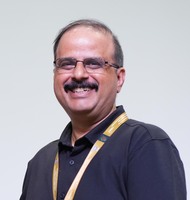
Dr Santosh Chauhan is a Faculty Member at the CSIR-Centre for Cellular and Molecular Biology (CCMB) in Hyderabad, India, who works in the area of innate immunity, autophagy, and cellular stress responses. After earning his PhD from the All India Institute of Medical Sciences (AIIMS), New Delhi, and completing postdoctoral fellowships at the MD Anderson Cancer Center and the University of New Mexico, he established his independent research group at the Institute of Life Sciences (ILS), Bhubaneswar, in 2015, before joining CCMB in 2022. One of the important discoveries from his group is the characterization of Programmed Cell Revival (PCR), a new biological phenomenon. His work demonstrates that cells can actively recover from advanced, structural stages of cell death. In physiological contexts, this survival mechanism is tied to wound healing, developmental acceleration, and the maintenance of cellular stemness. The cornerstone of his laboratory's work is the dissection of cellular autonomous defense mechanisms, where he has made seminal contributions to understanding how the immunity-related GTPase M (IRGM) acts as a master regulator of inflammation, autophagy, and interferon signalling to combat infections and auto-inflammatory diseases.He is EMBO Global Investigator and an elected Fellow of all three Indian Academies of Science (IASc, INSA, and NASI).
Session 2B: Inaugural Lectures by Fellows/Associates
Chairperson: Janendra K Batra, NICHDR, New Delhi
Programmed Cell Revival: Redefining the Borders of Cellular Life, Death, and Tissue Regeneration
For decades, commitment to cell death was viewed as a one-way path. However, recent paradigms reveal that cells can orchestrate remarkable recovery processes from the brink of imminent death. Our work has introduced the concept of “Programmed Cell Revival”, a tightly regulated, cell-intrinsic survival mechanism activated after severe homeostatic stress. Using multi-omics profiling and diverse animal models, we demonstrate that when cells face near-lethal injury from lysosomotropic challenges, they trigger a biphasic transcriptional programme. The initial phase opens chromatin accessibility to upregulate pathways crucial for stemness, embryonic development, and inflammation. This is followed by a metabolic and structural overhaul that achieves complete cellular renewal. Crucially, harnessing this intrinsic survival programme in vivo significantly accelerates skin wound healing, corneal repair, and tissue regeneration across various species. By challenging the traditional dogma of irreversible cell death, these findings establish Programmed Cell Revival as a physiological mechanism for tissue repair, opening innovative, host-directed avenues in regenerative medicine.